Connecting Legal Workflows, Documents and Every Client Connection
Linking matter workflows, documents and client relationships in a legal workspace.
Schedule a Strategy Call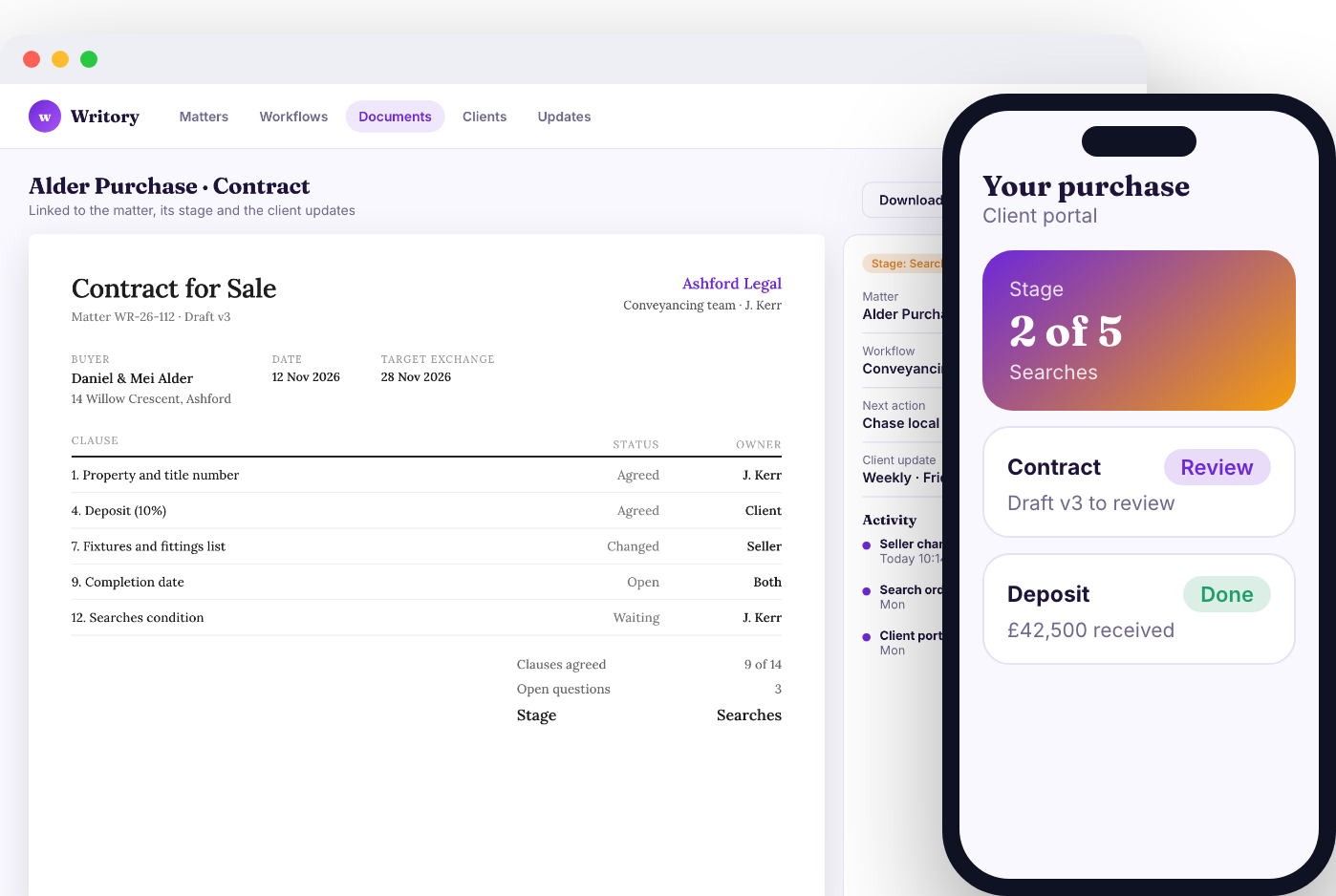
At a Glance
Project name
Writory
Industry
Legal Tech IT
Service offered
Product Design Study & Legal Workflow Work
Writory is a legal practice management concept built around how a firm handles matters. It links workflow stages, documents, client records and assigned tasks so legal teams can follow each legal case from each inquiry through closure.
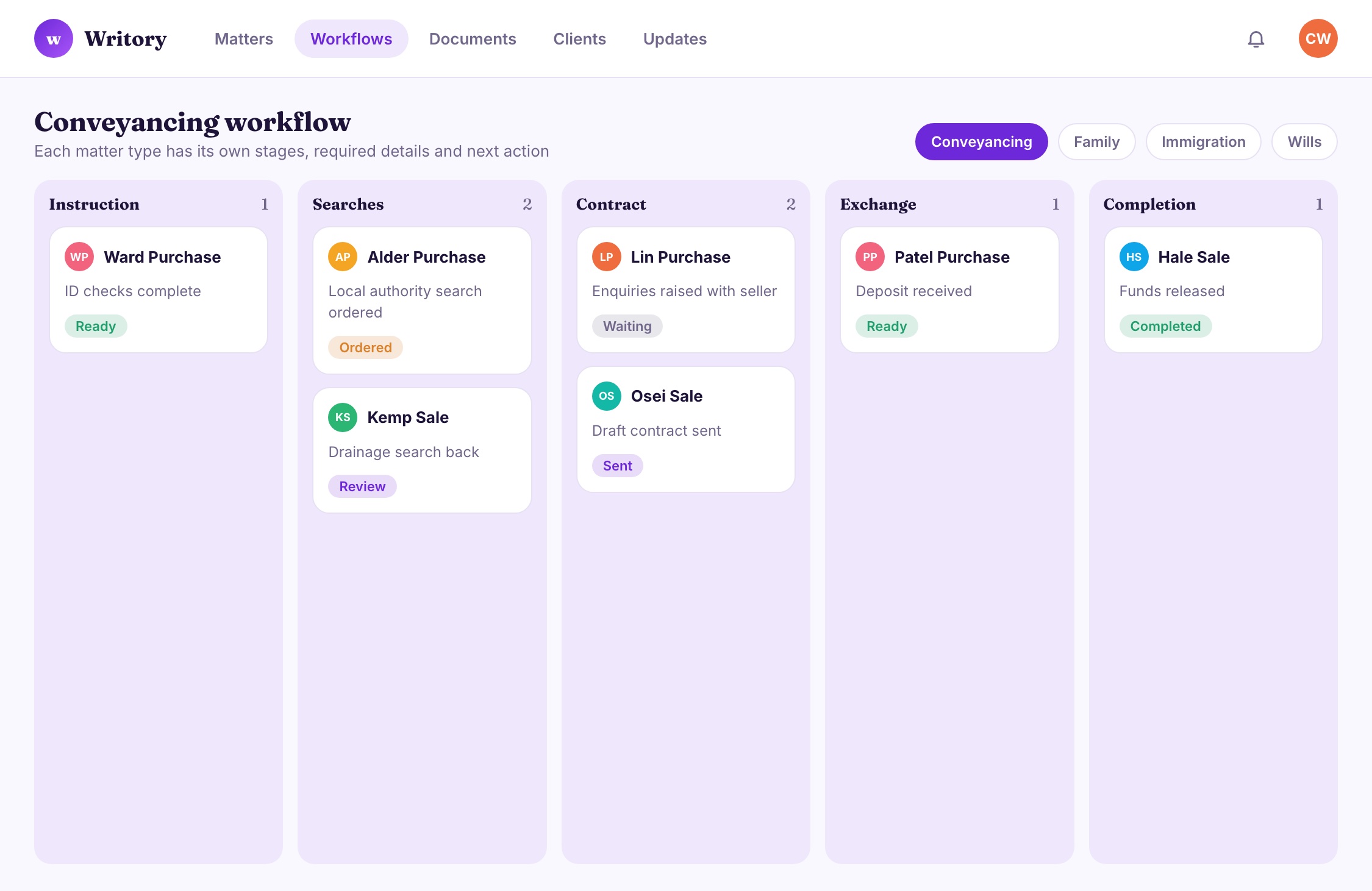
The proposed workspace adapts to different matter types, with defined stages, required information and assigned next actions. Documents and client updates would stay linked to the matter, giving staff context when work changes hands.
Writory explores how legal workflows could support consistent matter handling, with attorneys retaining oversight of legal work and client counsel.
1
The Challenge
The brief addresses four workflow gaps: unclear matter handoffs, disconnected documents, inconsistent client updates and limited visibility into the status of firm work.
-
Unclear Work Handoffs
Matter progress can depend on informal updates. Teams need to see the stage, assigned owners and required action when responsibility changes.
-
Scattered Documents
Drafts, attachments and file notes can sit across inboxes and folders. Staff need documents linked to the case record, with a record of changes and review.
-
Client Update Needs
Client details and communication history can fragment. Teams need shared context before sending updates, requesting information or daily follow-up.
-
Limited Matter Status Clarity
When progress lives in separate task lists, managers must chase staff updates. They need a view of all work, overdue actions and stalled matters before assigning next steps.
2
The Approach
The design starts with matter types and the steps required. Shared records would link task ownership, document preparation and client updates, with review points defined by a firm’s process.
-
1
Map the Matter Stages
Map clear stages, required information and responsible roles for each matter type. Review handoffs and exceptions with the team before designing workflow rules.
-
2
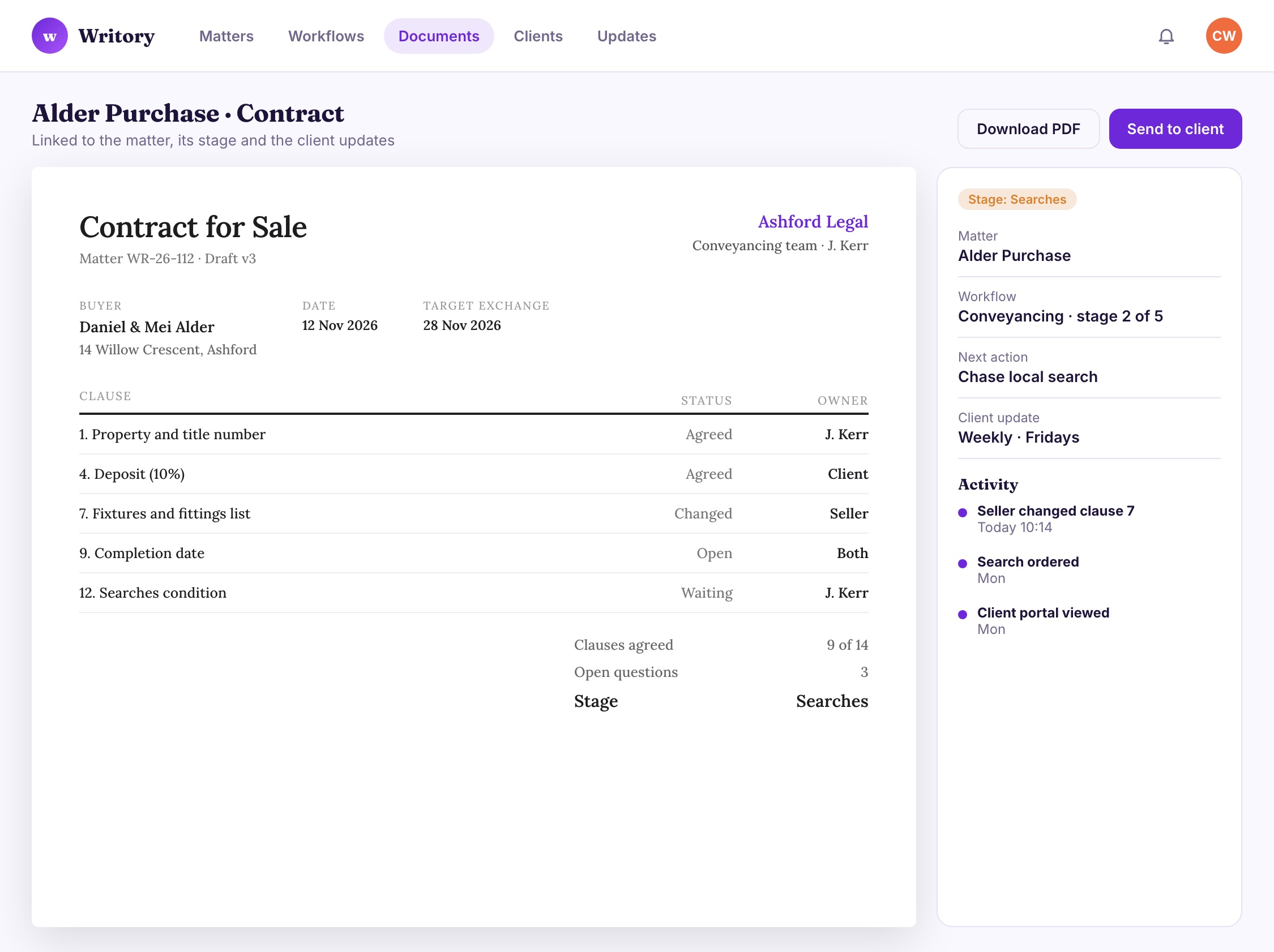
Link Documents to Matter Work
Organize documents, file notes and correspondence around the relevant matter. Reusable templates would draw on recorded details, with staff reviewing drafts before attorney approval.
-
3
Plan Client Updates
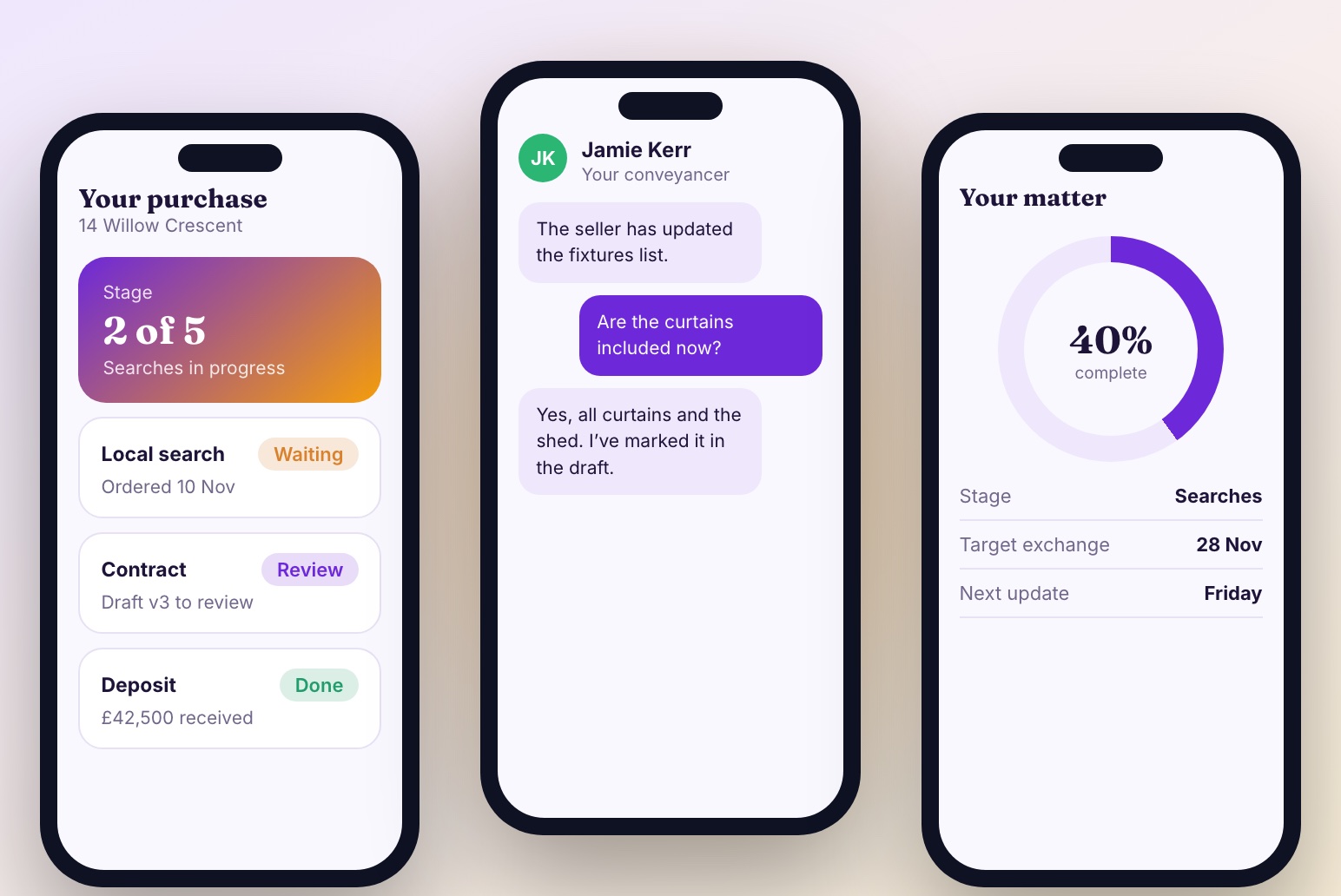
Link contacts and communication history to the matter. Define when updates are due, who prepares them and which messages require attorney review before they reach the client.
-
4
Make Work Visible Across the Firm
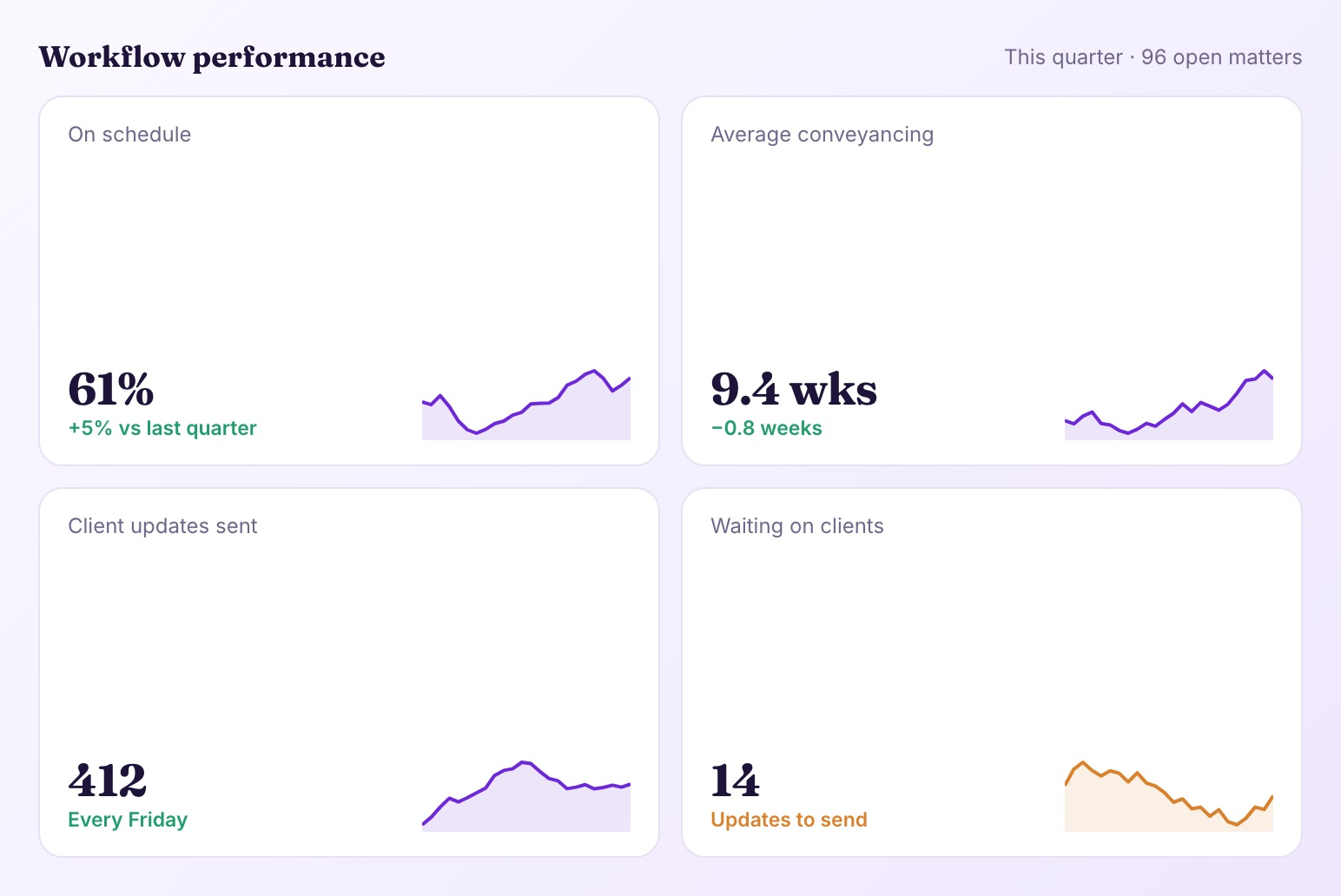
Design role-based views of ongoing matters, assigned tasks and upcoming actions, helping staff identify stalled work and coordinate each handoff.
3
The Outcome
This experience brings four areas of legal work together: matter progress, document preparation, client updates and oversight.
-
Guided Progress
Teams could use set matter stages with assigned tasks and required information. Clear handoffs would help each owner understand what must happen before the next stage starts.
-
Documents in Place
Staff would find documents and file notes in the related matter. Shared templates could reuse recorded details, with review steps retained before a draft is approved or sent.
-
Client Context
Contacts and communication history would stay linked to matters. Staff could review exchanges before preparing updates, with attorneys overseeing client advice and decisions.
-
Clear Work Oversight
Managers would review all matters and assigned actions in staff views. Status and task information would help them identify bottlenecks, discuss priorities and reassign work.
4
Value Delivered
Writory connects matter workflows with documents, people and review steps that move work ahead:
- Teams could track matter stages and assigned tasks.
- Shared matter records would connect documents, file notes and client communications.
- Reusable templates would support document preparation with formal review steps.
- Traceability: Recorded stages and task ownership would help teams understand how matter work moves.
- Access: Role permissions would scope document and matter visibility around staff roles and client needs.
- Growth: Configurable matter types could support new practice areas and firm workstreams.
Similar case studies